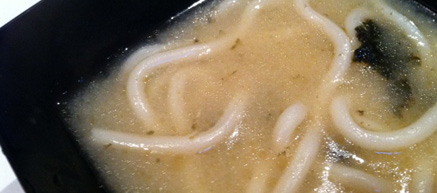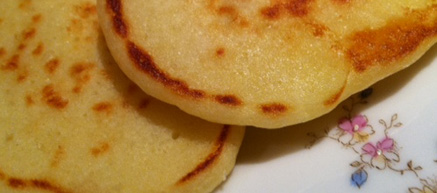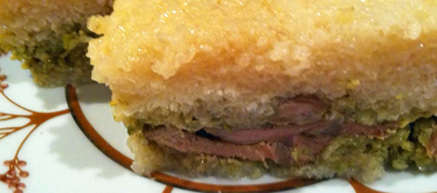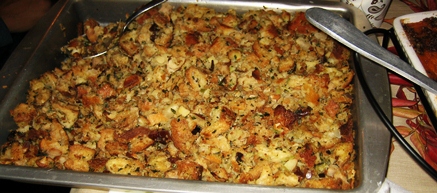



























As a half-Moroccan household, you would think I would have embraced cooking with preserved lemon much sooner than I did. Truth be told, I was a bit intimidated by preserved lemon. I didn’t know how to make it and thought a fresh lemon slice would suffice just fine as a substitute. I was very, very wrong.
The first time I encountered preserved lemon (l’hamed marakad in Moroccan Arabic) was on my second trip to Morocco Read more » |
When the days grow shorter and the temperature decreases so much so that you see yourself breathing outside, then it’s that time of year when you need the right beverage to warm you up from the inside. This winter beverage is glühwein in German, literally glow wine or hot wine punch would be the loose English translation. Glühwein is popular in all the German-speaking countries, the Netherlands and the Alsace region of France as a traditional holiday drink Read more » |
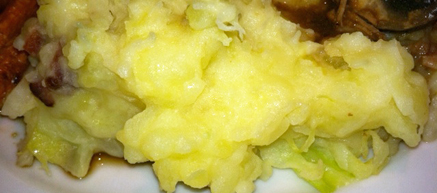
Samhain is the birth mom of Halloween. The pagan holiday took place on October 31 in Ireland. It marked the end of a cycle, when the old crops were harvested, the livestock brought indoors and souls would return to visit their former homes. Because it takes place in the autumn, root vegetables are stars of the table. Once upon a time, Colcannon, a mashed potato and cabbage dish, was served with objects in it, to predict for the coming year Read more » |
Eid is a time for food, family and celebration. Lamb is a popular dish because of the animal that is sacrificed. Below is a Moroccan dish I learned from my mother-in-law (with some variations). She made this last time I was in Morocco with my family and an animal was sacrificed in celebration of my second daughter’s birth.
Serves 4 to 6
Ingredients:
|
When I was growing up, fragrant yellow coconut rice was right at home sitting next to the roast beef, honey-baked ham and Yule log cake served during Christmas dinner.
Every year, my mom would make nasi tumpeng, a unique Indonesian rice combination. She would start by making rice flavored with coconut, turmeric and other herbs, which she would shape into a conical pyramid and place on a bed of folded banana leaves Read more » |
Apples and honey are the symbolic foods of the Jewish New Year. So let’s make something sweet to celebrate!
Ingredients
|
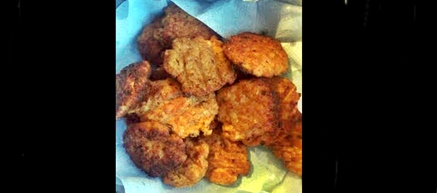
Looking for a fun way to celebrate Ethiopian New Year with your family? These snacks are great for lunchboxes, after school snacks or appetizer nibbles at your next dinner party. You can easily adjust the spice level to make them more or less but I lean towards more spicy!
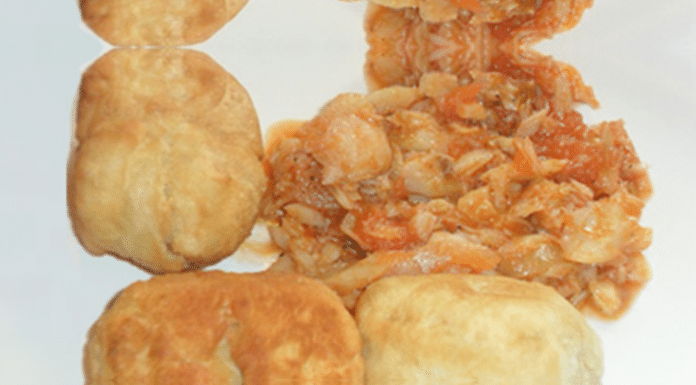
Ingredients:
1 c whole wheat flour
1 1/2 tablespoons berberé
1/2 tablespoon sugar
3/4 teaspoon salt
Read more » |
I make this dish quite often. It is a quick dish that isn’t too fancy, so it’s perfect for a weekday meal. It’s a traditional Jamaican breakfast that is often used with other forms of starch such as boiled banana, yam, potatoes, plantain and breadfruit. Codfish or saltfish is a major component of Jamaican cuisine and is very easy to make.
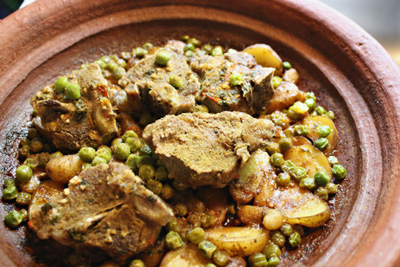
Ingredients
Saltfish
1 pack of salted Pollock (cod)
2 chopped tomatoes
1 chopped onion
Read more » |
In the southern Ourika Valley of Morocco, this lamb tajine is a very popular dish. The first time I made this, thinking I alone had invented it, my Moroccan husband exclaimed, “How did you learn to make an Ourika tajine?” I’ve never been to Ourika and admittedly I was a little hurt – this was my creation! Turns out I’d just made something women in Ourika have been making for generations Read more » |
For years, Dragon Boat Festival was rarely celebrated outside of China. It’s a wonder, because the beauty and excitement of sailing dragon-decorated boats down the river are unrivaled in other holidays. Pretty much every recipe I found for Dragon Boat Festival (June 23, 2012) was for zongzi, steamed rice dumplings. However, as these recipes were outside my culinary realm, I kept digging Read more » |
In 1925, the World Conference for the Well-Being of Children claimed that June 1 would become International Children’s Day. There are a few theories as to why this date was selected, one being that many Chinese orphans gathered in San Francisco on June 1 of that year to celebrate Dragon Boat Festival. Regardless of the differing beliefs about the origin, the tenant behind the holiday remains steadfast Read more » |
Falafel are deep-fried chick pea or fava bean balls. While they originated in Egypt, they are now eaten throughout the Middle East. They are commonly found in pita sandwiches but can top salads or stand alone.
Most recipes call for dried and soaked or canned chick peas. This one uses chick pea (or garbanzo) flour. While that may not be one of your pantry staples yet, once you make this recipe, it will be! Other than lemon juice, this recipe calls for all items you most likely have on hand already Read more » |
Wesak (also called Vesak), a Southeast Asian holiday, celebrates the birth and enlightenment of Buddha. Wesak is one of the most important Buddhist events and is celebrated with color and gaiety. While Wesak food varies by country, it is proper for food to be vegetarian. This dish was simple to prepare and delicious! If your children do not like spice, you may want to omit the cayenne Read more » |
Beltane, a Gaelic festival, celebrates the coming of summer. The name derives from the Gaelic word for May. The holiday is celebrated on May 1 in Ireland, Scotland and the Isle of Man. Foods eaten represent the fertility of the Earth–eggs, creme and berries are prevalent. Sugar pie is a “summer” pie and reminiscent of pecan pie filling, minus the nuts Read more » |
Vaisakhi, celebrated throughout the northern part of the Indian subcontinent, carries different meaning for different sects. For the Sikh population, among other things, it marks the anniversary of the abolition of the caste system and the celebration that all people are equal. For the Hindis, it is the start of the New Year. For the Buddhists, it is the day Gautam Buddha reached Nirvana Read more » |
Passover celebrates the Jewish post-slavery exodus from Egypt. The holiday begins on the 15th day of the month of Nissan, which typically falls in March or April, and lasts seven or eight nights, dependent on different Jewish sects. Because the Jews fled without warning and thus had no time to let their bread rise, throughout the holiday no leavening of any sort can be eaten Read more » |
This dish was my childhood favorite; we called it red rice (because of the tomatoes in the rice). It was also my children’s favorite when they were growing up. Whenever I asked them what they wanted, they would say lubia polow. I have included this recipe in memory of my childhood and theirs.
makes: 6 servings
preparation time: 20 minutes
cooking time: 45 minutes
Ingredients:
Long-grain white basmati
Rice 2 cups (for this recipe I like to use Ahoo Bareh basmati rice)
Olive oil – 1/2 cup
Onion 1 large, peeled and thinly diced
Read more » |
Holi, the Hindu Festival of Colors, is the celebration of spring awakening. It begins on the last full moon day of the lunar month Phalguna (February/March). Typical rituals include throwing colored and scented powder and perfume on participants. The two-day festival allows people to drop societal norms imposed by class, age, gender and caste, thus it’s a time for united celebration Read more » |
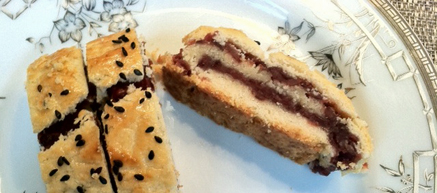
Hamantaschen (also sometimes written Hamantashan) are the quintessential Purim treat. While the origin of the cookie and its name are in debate, the most taught explanation is that both are derived from the hat that Haman, the antagonist of the holiday’s story who sought to destroy all the Jews, wore. Purim celebrates the salvation of the Jewish people from Haman’s evil plot Read more » |
The term Carnival is derived from the term “carnelavare,” which loosely translates to “remove meat.” The festivity is a time of indulgence before the austerity of lent. The celebration, held the 46th day before Easter, varies by country but is marked by dancing, singing and parades.
Because my past few recipes have been carb heavy, I debated including this even though I learned it is a Carnival staple Read more » |
Nirvana Day, also called Parinirvana Day, is celebrated throughout the Mahayanan Buddhist world. While celebrations (and even the date the holiday is celebrated) differ depending on their locale, the universal premise of the holiday is to commemorate the day when Buddha reached full nirvana, or bliss, through death. Buddhists celebrate death as a form of change, rather than mourn it Read more » |
Imbolc, a Gaelic festival with Medieval origins, is a celebration of hearth and home. It is normally held on February 1 or 2 and marks the oncoming of spring. The holiday is often celebrated by enjoying dairy goods, as milk represents spring birth. Below is a recipe for boxty, Irish potato pancakes (and excellent conduits for fresh butter!). Unlike their Eastern European relatives, these pancakes are made with precooked mashed potatoes Read more » |
This Vietnamese dish is traditionally eaten on Tết, the country’s New Year’s celebration. However, Banh Chung is so delicious, the dish doubles as a daily staple. Even more fun than unwrapping the bundle of sticky rice and pork, is the tale of its inception. Ruler Hung Vuong challenged his princes to present to him the most delicious symbolic dish they could find to honor Tết Read more » |
Rosca de Reyes is the traditional pastry bread eaten on Three Kings Day across Latin America and beyond. The best part for kids is a hidden surprise in the bread–a plastic baby (representing the Three Kings’ search for baby Jesus). Whoever finds it in their slice has good luck or some other obligation. For example, in Mexico traditionally, the person who found the baby had to host a party on February 2, known as Día de la Candelaria–this ritual is no longer as common though everywhere in Mexico today Read more » |
This Hopi recipe is perfect for the family on those cold and long winter days.
Ingredients:
1 pound ground beef (you can easily omit this to make it vegetarian)
1 onion, chopped
2 cloves garlic
4 large carrots, chopped finely
Read more » |
One of the requirements for our Thanksgiving was that each family had to bring a dish from their country. We had Indian Samosas with chutney, South Indian idlis with another type of chutney, Mexican minced meat stuffing and chicken, a French beet creation (our French friend said it was French but didn’t have a name for it), baked brie in puff pastry, and another French potato dish Read more » |
By Gabriela from Gabriela’s Kitchen
Since November 1st and 2nd are believed to be the easiest days for mis muertos queridos (my departed loved ones) to visit and take pleasure in earthly delights, I will light candles and set out fragrant marigolds to guide their way, bake delicious pan de muerto to satisfy their stomachs and set out a glass of water to quench their thirst Read more » |
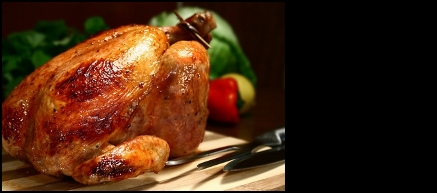
While the international community is traveling to Munich to drink beers from huge glasses and eat grilled chicken or schweinshaxn (roasted pork knuckle) at the world’s most famous beer party, Oktoberfest, we look for something a little lighter but every bit as German.
Serves 4
Ingredients:
For the pheasant:
1 (1 Read more » |
Doro wat is a popular Ethiopian dish that is eaten year round and traditionally made on Enkutatash, the Ethiopian New Year. Search the spice rack to create this perfect recipe for the whole family, with basic
Ingredients and a low-prep time. Go ahead, make something new tonight!
I
Read more » |
I can remember when I was little my parents would feed us early and send us to bed to get some peace during iftar (the daily breaking of the fast during Ramadan). We then spent all evening sitting on the stairs trying to find ways to come downstairs and eat all the nice things everyone else was having. I am now having to deal with the same from my children Read more » |
Harira is a traditional Moroccan soup made during Ramadan to break the daily fast, and is served after eating dates and milk. It is traditionally made with lamb, but the lamb can be omitted to make it vegetarian for a hearty meal as well. I prefer it without lamb.
My first harira was out of a box (yes they really do make a boxed version!) Back in the day, when my husband and I were just boyfriend and girlfriend, he and his brother were making Ramadan dinner with boxed harira Read more » |
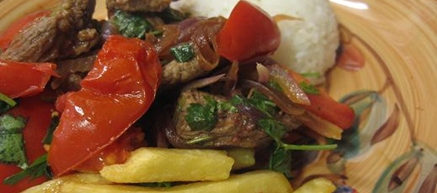
A lot of typical Andean foods are comfort foods for me. I know comfort foods are usually something that reminds you of your childhood, but comfort foods for me are related to places and times when I felt everything about life was good, much like the time I spent living in Ecuador. This is a Peruvian recipe for lomo saltado (Ecuadorians make it too) from Fighting Windmills that is simple and so tasty Read more » |
This simple Mongolian recipe is popular at Naadam. Khuushuur uses straightforward
Ingredients that can be found tucked away in your kitchen cabinet. Served best warm, they are also a great alternative to the potsticker or empanada (yum).
Main I
Read more » |
After browsing many Scandinavian recipes for this issue, we struck upon one that is summery, Swedish-inspired and delicious. The place where we found it is sort of the Swedish stereotype—eh hem— Ikea . Just because Ikea makes some of the most popular furniture worldwide doesn’t mean they can’t cook as well so we thought we would give it a try Read more » |
The flashing-neon preface to this recipe is that this is our InCultureParent twist on poutine, the popular Canadian French fry specialty. Because we always try to feature healthy recipes, it didn’t feel right to us to encourage you to eat French fries, even if they are Canadian French fries. So we made our own variation of this Canadian dish, with baked sweet potatoes as French fries Read more » |
Hoddeok is a “traditional” Korean street vendor food. Korean people love to eat this delicious snack especially in the cold winter. It tastes best when it is warm. You can find the
Ingredients for this recipe easily anywhere, so I highly recommend this one. Do you like sticky buns or pecan rolls? If so, I bet you will love this Read more » |
Editor’s note: On Vesak, it is prohibited to kill any being, so everyone eats vegetarian. Here’s a recipe from Malaysia that is popular on Vesak. This author’s food blog, Pure Glutton, is guaranteed to make your tummy rumble with its pics!
Fried Meehoon (vegetarian version)
Ingredients:
300g/1.5 cups meehoon (dried rice vermicelli)
150g/1 cup beansprouts
150g/1 cup shredded carrots
150g/1 cup mustard leaves (sawi)
Read more » |
Sarson ka sag is traditionally a Punjabi dish, often made on Vaisakhi but not exclusively. It’s totally delicious, vegetarian and incorporates one of the world healthiest veggies—mustard greens—in a way that even your kids might eat. Mustard greens are an excellent anti-cancer vegetable, can lower cholesterol and have been known to be beneficial for colds, arthritis and depression Read more » |
Thandai is a refreshing milk-based drink, accented with bold flavors. It is traditionally consumed in Northern India during the festival of Holi. You can find many variations of this recipe and nothing is quite set in stone so feel free to experiment with spices and proportions.
Ingredients:
4 cups of milk (whole milk is best but you can substitute for low fat or soy)
½ cup almonds
1 T poppy seeds
1 t black peppercorns
4 green cardamom pods, crushed
Read more » |
Yuanxiao, or sweet rice balls, are traditionally eaten on Lantern Festival, which is the last day of the two-week Chinese New Year holiday. Lantern Festival falls on the first full moon of the new year and people traditionally go out on the street at night carrying lanterns, and light fireworks and visit friends and family. They also eat this sweet dessert, which has a round shape symbolizing family unity and happiness (and the full moon) Read more » |
Because the Baha’i faith was born out of what was formerly Persia, Persian recipes are very appropriate for Ayyam-i-Ha. This recipe for fesenjan, also called fesanjoon depending on the regional dialect, combines chicken with pomegranates and walnuts for an amazing explosion of taste.
Ingredients:
1/4 cup olive oil
2 to 3 pounds of chicken, cut into pieces
2 diced onions
2 cups of walnuts, finely ground (in a food processor)
2-3 cups of water (you can alternatively use chicken stock for extra flavor)
Read more » |
This is a traditional Armenian Christmas recipe. In the early days, at every Armenian feast, Anooshabour was a traditional must!
Ingredients:
1 c. skinless whole grain wheat (also called shelled wheat berries)*
1 1/2 c. golden bleached raisins
2 c. dried apricots
3 qt. water
Read more » |
Pomegranates are the Armenian national fruit and you could easily say that vodka is an Armenian national pastime. Combine the two together and you have an explosively delicious cocktail, rich in Armenian flavor.
This is a great one not just for the holidays but any festive occasion.
Ingredients:
1 1/2 cups pomegranate juice
2 ounces quality vodka
1 ounce cointreau or Triple Sec or Grand Marnier
1 tsp Read more » |
Ozoni, or mochi soup, is a Japanese holiday meal traditionally prepared on New Year’s Day. After baking, fresh mochi is put into a bowl, and soup and cabbage are ladled over it. I remember watching my mom make ozoni once by boiling pork bones to create a soup base then adding napa cabbage. There are many different variations of ozoni–what follows below is my recipe Read more » |
By Stacey Snacks
The Yiddish translation of Kugel is any baked pudding in Eastern European Jewish culture. My favorite is a noodle kugel, also known as noodle pudding. There are two types of noodle kugel: a sweet kugel and a savory one (which has no sour cream or cottage cheese).
The sweet one (made with dairy) has to be served with a meal that is free of meat, and the savory one could be served alongside a meat dinner (making it kosher) Read more » |
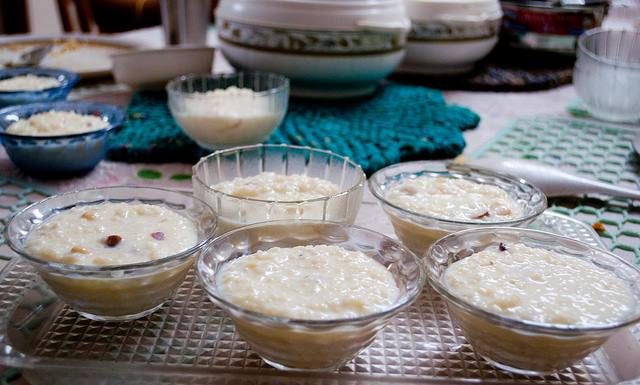
As much as Diwali is a festival of lights, it is also a festival of sweets. There are so many amazing sweet dishes made in celebration of Diwali. Here we present one of them, Kheer, an Indian rice pudding.
Serves 4
Ingredients:
1/2 cup basmati rice, washed and drained
4-5 cups milk
1/2 teaspoon ground cardamom
1 tablespoon rose water (optional but worth it)
Read more » |
Apricots are a traditionally Armenian fruit. If you haven’t had apricots in Armenia, you haven’t tasted the sweet juiciness that apricots can be. What follows is a wonderful apricot tart, inspired by the Armenian fruit.

Ingredients
4 eggs
2 cups sugar
2 tsp. baking powder
2 cups canola or vegetable oil
Read more » |
From Multicultural Book Review: I Have an Olive Tree
From Children’s Books that Travel to Africa
From Homeschooling in Myanmar: Visiting Bagan
From Best Curried Red Lentil Soup Recipe
From Are Germans Really Rude?
From How to Talk to Kids About Race: What’s Appropriate for Ages 3-8
From Ten Reasons Parents Should Read Multicultural Books to Kids
From How to Talk to Kids About Race: What’s Appropriate for Ages 3-8
From How to Teach Kids about Race and Social Justice: One Teacher’s Approach
From Breastfeeding in the Land of Genghis Khan
From Do I teach my child my native language even though I am not fluent?
From A Buddhist Approach to Sex and Your Teenager
From 7 Tips for Parents with Inflexible Travelers
From Cross-Cultural Parenting in Guatemala: Rethinking Cultural Norms
From Diwali Craft: Make a Lantern
From 5 Board Games from Around the World
From Parenting in Kenya: What It Takes a Village Really Means
From Cross-Cultural Parenting in Guatemala: Rethinking Cultural Norms
From Almost African: My Childhood as a Serbo-Croatian in Sudan
From Traveling to Myanmar with Kids
From Around the World in One Semester
From Are Germans Really Rude?
From Perfect Bilingualism: Does it Exist?
From 10 Things Not to Say to Parents of Multilingual Children
From Cross-Cultural Parenting in Guatemala: Rethinking Cultural Norms
From Falling off the OPOL Wagon
From Cross-Cultural Parenting in Guatemala: Rethinking Cultural Norms
From Preparing our Children for Racism — Part 1
From Breastfeeding in Jordan